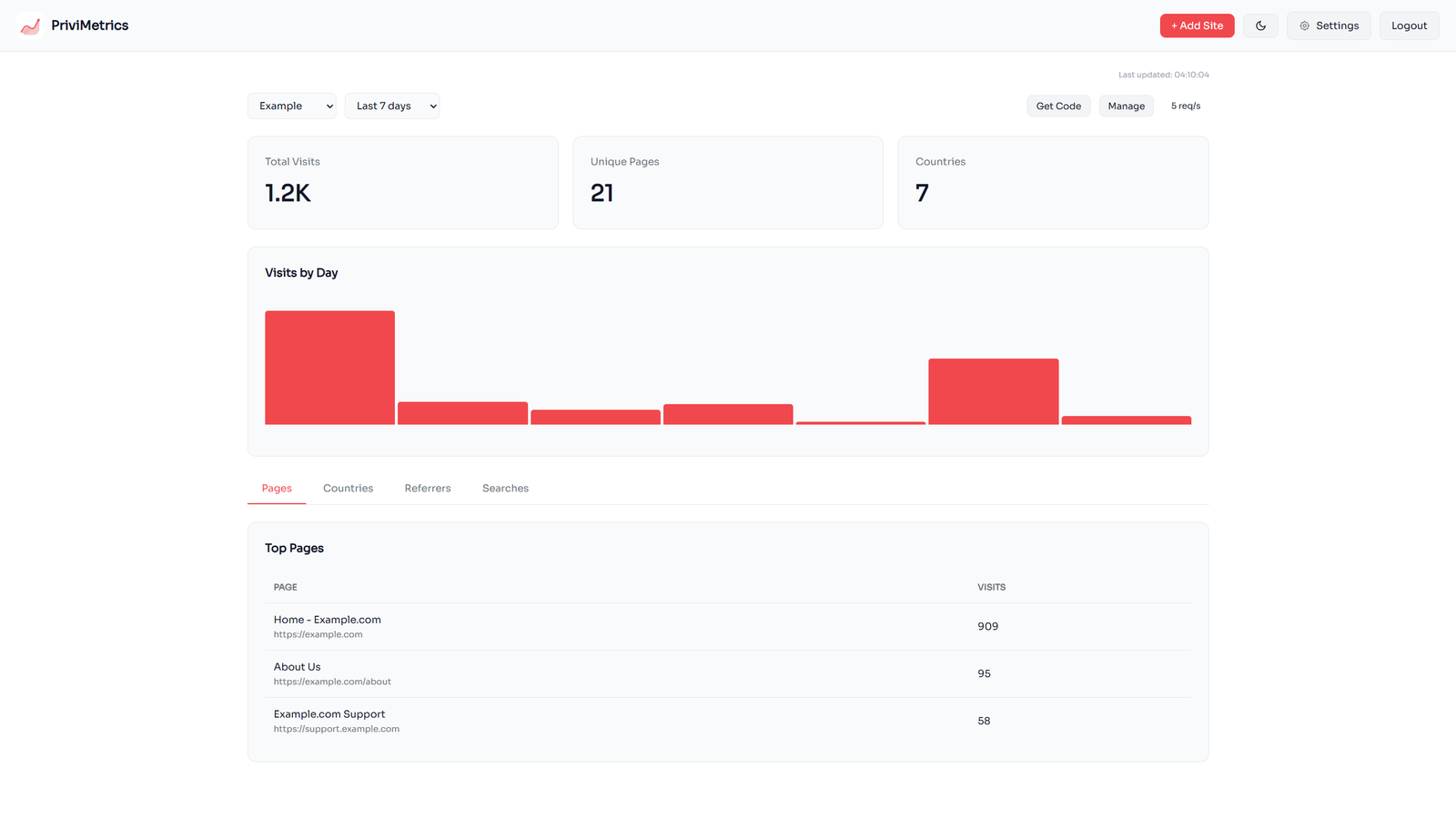
We Created PriviMetrics Because Analytics Should Respect Privacy
When we were looking for a free analytics tool for our own websites, we tested many popular solutions. Unfortunately, most of them had the same problems: they were heavy, required databases, relied on external services, or simply didn’t work well on shared hosting. Some claimed to be “self-hosted”, but in reality still depended on third-party infrastructure.
On shared hosting, things were even worse. Analytics scripts often loaded too late, missed visits, or consumed too many resources. For small projects, personal websites, and early-stage SaaS products, this was frustrating and unnecessary.
So we decided to build our own solution.
From a Simple Counter to PriviMetrics
At the beginning, the project was extremely simple. It only counted page views. Back then, it was called UltraPage Analytics. There was no big vision, just a lightweight script that worked reliably where others failed.
Over time, the project evolved. We refined the code, improved performance, and focused strongly on privacy. Eventually, UltraPage Analytics became PriviMetrics, a modern, privacy-first analytics tool designed specifically for shared hosting environments.
PriviMetrics is built with plain PHP, without unnecessary frameworks or background workers. It runs fast, loads instantly, and works even on the most basic hosting plans.
Privacy First, Always
We deliberately avoided cookies and invasive tracking techniques. Visitor data is hashed and protected, and no personal data is stored unnecessarily. We believe website owners should be able to understand their traffic without violating user trust.
For location detection, we chose a different approach than most analytics platforms. Instead of heavy IP-based geolocation services, PriviMetrics uses the visitor’s browser language and time zone to determine the country.
This method is:
More privacy-friendly
Much lighter on resources
Effective even when users browse through VPNs
It’s a practical compromise between accuracy and respect for user privacy.
Built for Shared Hosting
One of our main goals was to make PriviMetrics work perfectly on shared hosting, without requiring VPS, Docker, or complex server configurations.
That’s why:
No database is required by default
Data is stored in lightweight XML static files
Backups are simple and fast
Installation takes only a few minutes
Choosing the Right Storage: XML or MySQL
One of the key design decisions in PriviMetrics was giving users a clear and simple choice of storage, depending on their traffic and hosting environment.
That’s why PriviMetrics offers two storage modes right from the installer: XML (file-based) and MySQL (database-based).
XML Version - Lightweight and Perfect for Shared Hosting
The XML version is the default and recommended option for most websites.
It stores analytics data in structured XML files, which makes it extremely lightweight, easy to back up, and completely independent of any database server.
This version is recommended for:
Small to medium websites
Personal projects, blogs, landing pages
Fast setup with no database configuration
Standard shared hosting environments
The XML version comfortably handles:
Up to ~50,000 visitors per month
Up to ~2,000 visits per day per site
Because it avoids database overhead entirely, it performs very well on shared hosting, where MySQL connections are often limited or slow.
MySQL Version - Built for Scale
For websites with higher traffic or more demanding analytics needs, PriviMetrics offers an optional MySQL storage mode.
This version is designed for:
High-traffic websites
SaaS dashboards and larger platforms
Better performance at scale
Advanced querying and long-term data growth
The MySQL version is recommended when your site exceeds:
50,000+ visitors per month
2,000+ visits per day per site
By using a database, PriviMetrics can scale efficiently while still remaining privacy-friendly and fully self-hosted.
Same Features, Different Scale
Both storage options offer the same PriviMetrics features and interface. The only difference is how data is stored and how much traffic the system is optimized to handle.